
New Brighton Directory Collections
New Brighton does not have one verified, uninterrupted set of city books. The strongest local lead is a North Suburban title that includes New Brighton with several nearby communities. Ramsey County Library, the Minnesota Historical Society, and Saint Paul Public Library each add a different access channel. Their holdings should be checked by title, year, and geographic run before a search begins. A city directory entry can tie a person to an address for one edition, but it is not a title record, a full household list, or proof that the person stayed there after publication.
| Collection | Years | Where Held | Access |
|---|---|---|---|
| St. Paul North Suburban directory lead | 1956 and 1958, with 1957 missing | Confirm volume and page through Ramsey County Library or Minnesota Historical Society | Library or archival confirmation required |
| Ramsey telephone and directory materials | From the 1890s onward, with city-specific availability varying | Minnesota Historical Society collections | Catalog, reading-room, or paid search request |
| Data Axle residence and business resource | Current vendor content, dates change | Ramsey County Library | Library-card access, including eligible remote use |
| St. Paul directories | 1856 to 1922 | Minnesota Historical Society and Saint Paul Collection sources | Digitized comparative research |
| Hennepin directories | 1859 to 1983 | Minnesota Historical Society | Digitized comparative research |
The documented North Suburban run is a lead, not a claim that every New Brighton street appears in every volume. Its gap in 1957 matters. Likewise, St. Paul and Hennepin volumes may supply regional context without placing a New Brighton household in those cities. Record the title page, page number, and the exact city or suburban run before treating a printed name as evidence.
New Brighton Directory Run
The Gale and Cengage author index identifies a “St. Paul North Suburban 1956 to 1958” run that includes New Brighton, Arden Hills, Mounds View, North St. Paul, Roseville, Shoreview, and White Bear Lake. The 1957 volume is specifically missing. That omission is useful rather than trivial: a move, marriage, or address change that seems to occur in that blank year should be tested with a telephone book, newspaper, permit file, school record, or deed instead of inventing a directory entry.
The Ramsey County Library directories resource shows the library channel for current residence and business directory research.
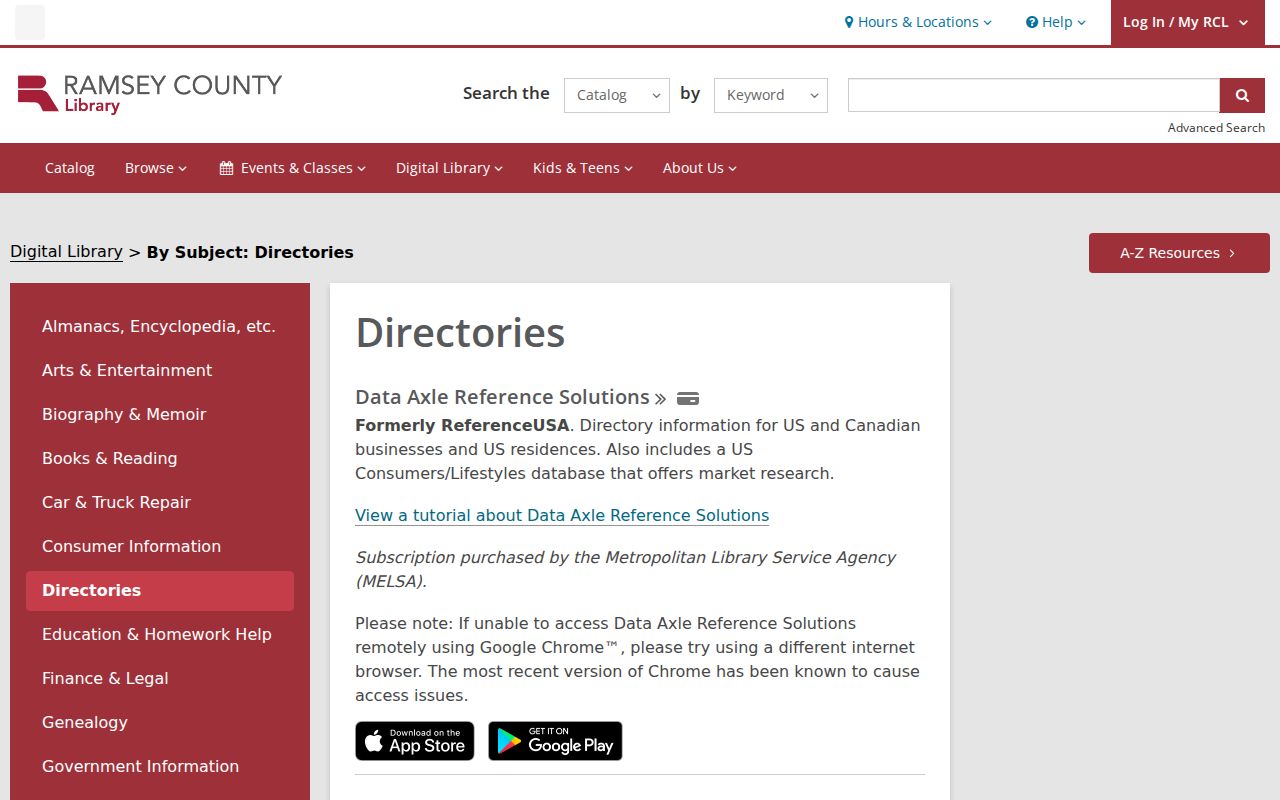
Its card-authenticated resource can help with a present or retrospective lead, but it is not an official ownership record and it does not replace a dated printed volume.
When a surname is uncertain, search the surrounding suburbs as separate possibilities. A nearby-city result is only a lead until its street, year, and source title fit the New Brighton question.
New Brighton Directory Library
The New Brighton Library is a practical first stop for catalog help, computers, scanning, copying, fax access, and a licensed directory resource. Its branch page places it in the New Brighton Community Center and lists phone reference as another option. The inspected hours were Monday 10 to 5, Tuesday 10 to 8, Wednesday 1 to 8, Thursday 10 to 5, Friday and Saturday 10 to 5, and Sunday closed. Because branch services and hours can change, confirm them before making a trip.
The library’s public pages do not verify a printed New Brighton directory shelf, obituary-index run, or newspaper-microfilm run. Ask staff to search the catalog using “New Brighton,” “Ramsey County,” “telephone directory,” “obituary,” and “yearbook.” If the local branch does not hold the needed edition, use MNLINK or an archival referral. The Ask a Librarian service accepts a short question by email and also offers phone reference; do not put confidential details in an email request.
Note: A catalog hit should still be checked for its exact year, place coverage, and whether it indexes names, streets, or both.
New Brighton Directory Archives
Several historical repositories fill gaps that a city book cannot. The New Brighton Area Historical Society collects photographs, printed materials, artifacts, and files about New Brighton, Arden Hills, and Mounds View. Its museum occupies the 1887 Bulwer Junction Depot at Long Lake Regional Park. The society is a sound channel for school, rail, business, and neighborhood context, although the public page does not expose complete catalog coverage or seasonal visiting details.
The Ramsey County Historical Society research center adds county archives, maps, photographs, municipal material, family papers, and building-permit resources. Research assistance and reproduction charges may apply. The Minnesota Historical Society Historic Sites Survey has a New Brighton property and address index for 1980 to 1983, with original forms at the Ramsey County Historical Society. A survey form can offer a historic name, construction estimate, architecture, and occupant context, but it does not establish title or a complete household.
The collections page for the Ramsey County Historical Society identifies the archival research channel used for these related materials.
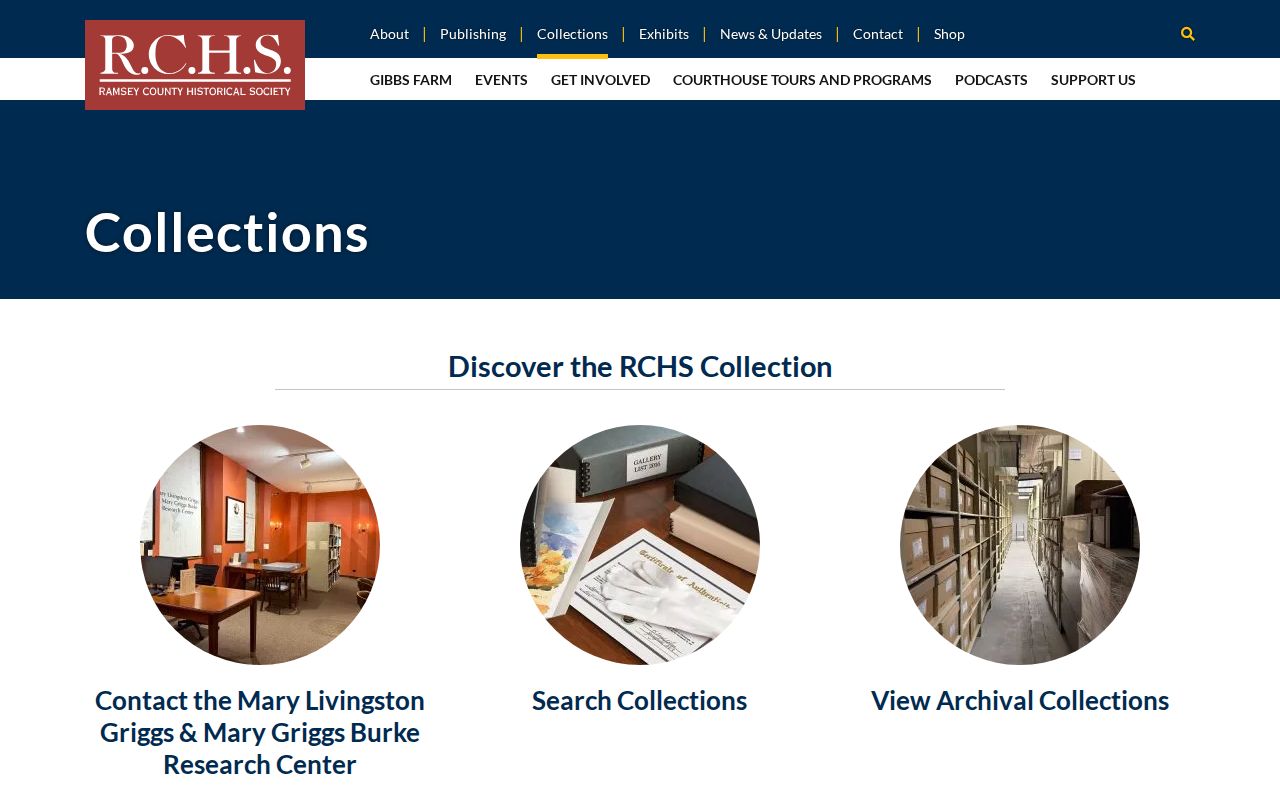
Keep an archive call number with every copy or scan. That detail makes a later directory, survey, map, or photograph possible to verify.
Reading a New Brighton Directory
A historical city directory is easiest to use when the full entry is captured, not merely the name. The available research does not expose a verified New Brighton sample page, so no local abbreviation or owner symbol should be guessed. Instead, preserve the page header and neighboring entries. They identify the correct edition and show whether the compiler grouped a person under a residence, business, or cross-reference.
| Directory identity | Title, publisher or imprint when shown, edition year, geographic run, and page number. |
|---|---|
| Name line | Surname, given name or initial, and any printed cross-reference. |
| Occupation | Occupation and an employer reference when the particular entry prints one. |
| Household clue | Spouse or household indicator when printed, without assuming everyone in the home appears. |
| Address line | Street address, telephone number when present, residence notation, and business or residence classification. |
- Criss-cross directory
- An address-first section that groups entries by street and number, useful for a historical address association.
- Householder index
- A name list centered on the listed household contact, not a complete count of people at an address.
- Abbreviation key
- The volume’s explanation of its own shortened marks. Photograph it before interpreting a notation.
Note: An address listing associates a person with that edition, but it does not prove ownership, current occupancy, or later whereabouts.
New Brighton Directory Blind Spots
City directories often list a head of household. Minors are usually absent. Women may appear only when independent, single, widowed, or divorced, and not every city or year was represented. Those limits shape a useful search strategy. An address-first search can be stronger than a person-name search when a surname changed or when several families occupied one building. A blank result may reflect the compiler’s rules, the missing 1957 volume, or a geographic run that stops short of the address.
Keep owner, taxpayer, deed grantee, permit applicant, and printed occupant as separate roles. A mismatch can identify a later transfer, an absentee owner, a business contact, or a historical resident. It is not a reason to merge records into one claim. The directory source and publication year belong beside every conclusion.
New Brighton Directory Place Names
New Brighton history supplies useful alternate place terms for archive and newspaper searching. The city was surveyed and platted in 1887, incorporated as a village in 1891, and became a city in 1974. Earlier material can appear under Mounds View Township rather than the modern city label. The City’s New Brighton Exchange history also preserves the local terms Butchers Spur and Northwest Quadrant for the rail and industrial area.
Search those names separately, then compare the street, date, parcel, or institution before treating a hit as local. The rail, packing, stock-yard, exchange, and depot vocabulary can explain an occupation or business line that looks unfamiliar in an old volume. It can also lead to a better newspaper query than “New Brighton” alone.
The Saint Paul Collection identifies print, microfilm, microfiche, yearbook, newspaper, street-directory, and suburban-directory research available for this regional comparison.
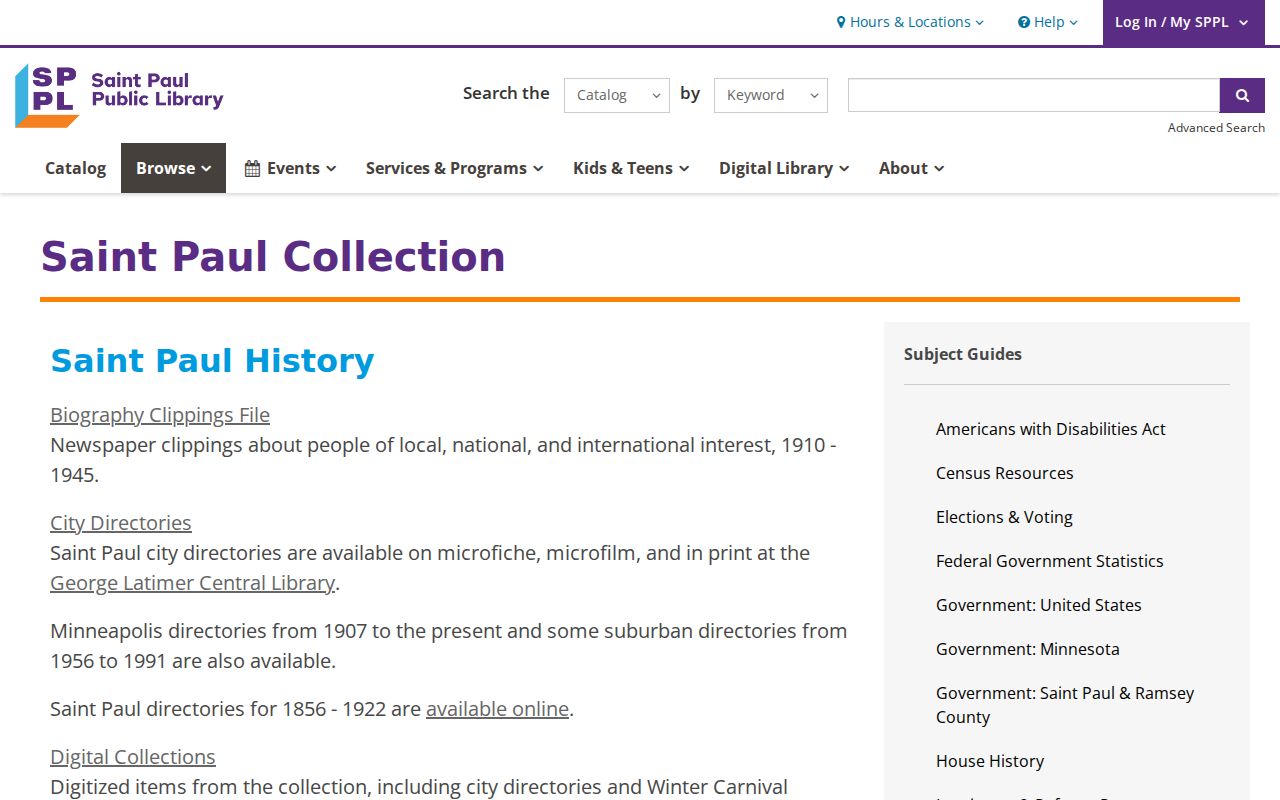
Saint Paul coverage can provide context for a regional trail, but it should never be silently treated as proof that a New Brighton address was included.
Tracing New Brighton Directory Households
A directory trail works best as a dated sequence. Begin with a known name or address, then move one edition at a time while preserving the spelling that appears in each source. Pair the local lead with federal census releases, Minnesota state schedules, deeds, permits, newspapers, or a Historic Sites Survey card as the years demand. The 1950 federal census is the latest public release, while the 1890 federal schedules were mostly destroyed. Minnesota schedules may require searching by county, subdivision, or household rather than name.
- Locate the earliest confirmed listing and record its exact title, year, page, place run, and street spelling.
- Check the next available edition forward and backward, noting a move, changed initial, spouse reference, or business classification.
- For an address question, inspect the criss-cross or street section if the volume has one, then note adjacent printed entries without assuming a full block roster.
- Pair the directory year with the nearest available federal or state census, keeping its enumeration geography separate from the city label.
- Test a disappearance with a deed, obituary, probate file, permit history, or newspaper notice, and cite each bridge independently.
A name found in an old book may need modern verification. When the question shifts to a present record, the New Brighton resident lookup uses official channels rather than treating a historical listing as current evidence.
New Brighton Directory Time Markers
Place history helps identify the right shelf and name variation. The following markers are documented in city and collection materials, but they do not establish an unbroken local directory run.
- 1887: New Brighton streets and village lots were surveyed and platted.
- 1891: The village was incorporated, a useful distinction for older records.
- 1956 and 1958: The identified North Suburban directory lead includes New Brighton, with 1957 missing.
- 1974: New Brighton became a city, so the modern city name may not fit earlier material.
These dates provide search boundaries. They should not be expanded into a claim about the first or last New Brighton volume, because the reviewed sources do not verify those endpoints.
New Brighton Directory Fallbacks
When a shelf search ends, the Minnesota Historical Society offers a City Directory Search Request for city directories, telephone books, or both. The request asks for a name, city or town, years, and added context. It permits up to five years. The inspected listing states a $10 charge per directory or telephone-book search, or $20 for both, plus a $5 processing component, with digital delivery normally in three to four weeks and sometimes up to twelve. Recheck those live details before ordering.
For historical municipal material not held on a library shelf, New Brighton’s Data Requests page supports requests by mail, email, fax, or in person. Describe the record type, address or name, date range, and whether inspection or copies are wanted. Public inspection is free under the stated policy, copies may be charged, and archival viewing can be arranged with the City Clerk. A specific request is more likely to locate a record than a broad demand for every file about a family.
For current address-keyed material after the historical search, use the New Brighton street directory for the separate parcel and record trail.